Unsent Text Project: Share Words You Never Sent
We’ve all been there, right? That knot in your stomach as you stare at your phone, thumbs flying across the screen, spilling out a confession that feels too raw to breathe—“I’m sorry I vanished when you needed me most,” or a gentle “I miss the way you made chaos feel safe,” or just a quick “Thanks for the quiet you gave me.” Your finger hovers over send like it’s the edge of a cliff, heart thumping wild… and then you pull back. You delete it, stash it in drafts, or let the app crash and burn. That message doesn’t evaporate, though—it curls up in the corner of your mind, a soft, stubborn ache that sneaks up on rainy days.
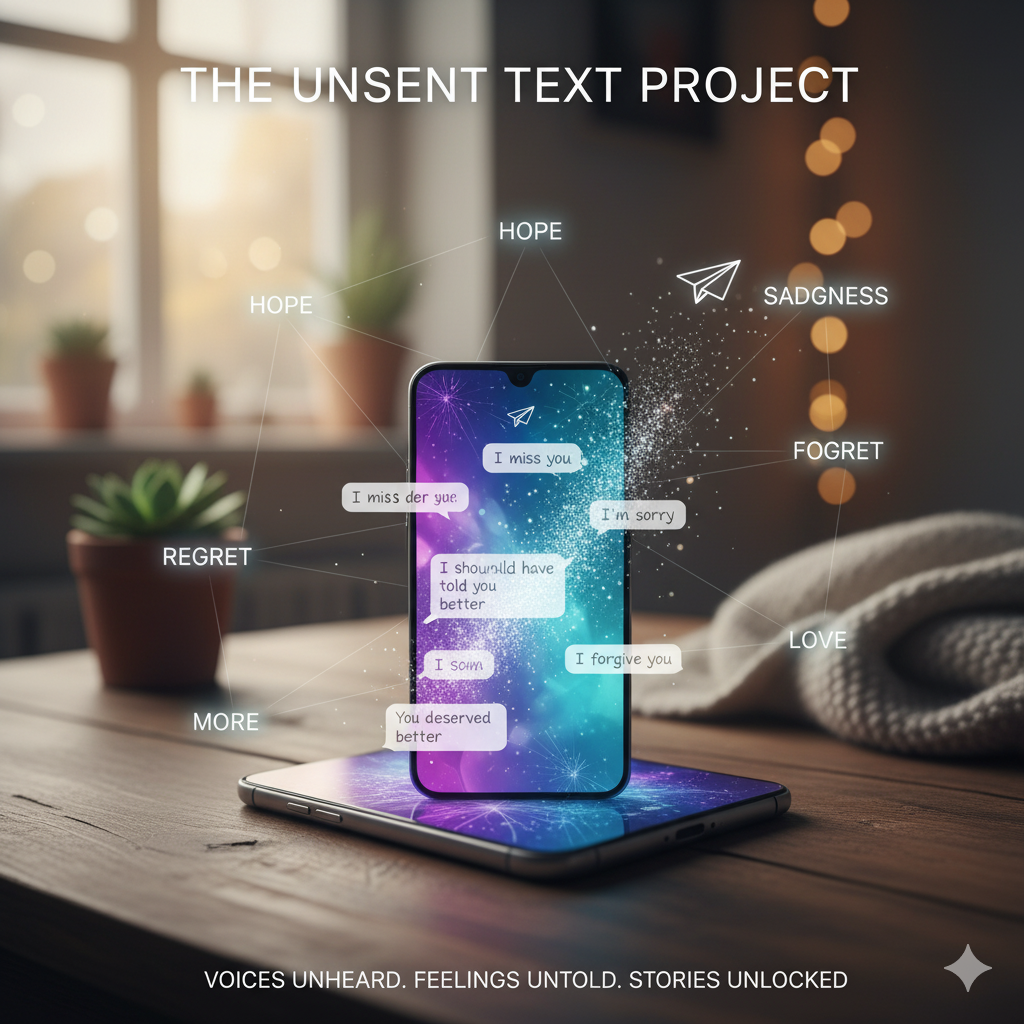
That’s the exact ache the Unsent Text Project cradles. It’s this unassuming corner of the internet where those almost-sent whispers get to stretch out, breathe, belong—a digital nook for regrets, almosts, and what-ifs to land soft, anonymous but not alone. If you’ve ever wrestled that “should I send?” monster and walked away lighter or heavier, this project feels like a friend who gets it, no questions asked. Let’s meander through what it really is, how it hums along, why it tugs at so many of us, and how you can dip in with intention—whether you’re chasing a little healing, a creative nudge, or just a nod from strangers who’ve been in your shoes.
How Others Structure the Narrative – and Where We’ll Expand
Flip through blogs or threads on the Unsent Text Project (or its cousins in the unsent-message maze), and you’ll spot the usual suspects: “Origins & Vision” sketching the spark, “How to Submit / How It Works” mapping the moves, “The Archive: Browse / Search Features” breaking down the tech, “Emotional Impact: Why People Write Unsent Texts” unpacking the pull, and maybe “Color or Tagging Systems” if they’re geeking on the glow. Those are solid starters, sketching the blueprint without the blueprints.
But here’s the thing—a lot of those pieces hit the brakes there, leaving the juicy bits on the curb. Like, how do you weave this into your writing ritual or therapy Tuesday? How do you sidestep the emotional potholes without a map? We’re going all in, wrapping “Unsent Text Project” into a chat that feels more like coffee with a friend than a lecture. We’ll nod to the classics but weave in hands-on hacks, feeling-forward tips, and the kind of real-talk warnings most skip, so you walk away not just nodding along but actually ready to roll.
The Birth of the Concept: Why an Unsent Text Project Was Needed
At its soul, the Unsent Text Project started with that one gut-punch question: what words do you type but let die? It’s like someone peeked into your phone at 2 a.m. and saw the graveyard of drafts you’ve buried. The spark fired from artist Rora Blue in 2015 with her The Unsent Project, nudging folks to spill unsent notes to first loves and tie ’em to a color that matched the memory. What started as a tender art nudge snowballed into this sprawling, sprawling space for any almost: crushes that curled up, friendships that faded, apologies that arrived too late.
Why did it land like a lifeline? That pause before send—it’s the real raw. It’s the fear that freezes, the hope that hesitates, the love that’s too tender to toss. The Unsent Text Project scoops those hesitations and says, “You’re not the only one.” It’s not about delivery; it’s about dumping the load without the fallout. In a world where every ping’s a performance, this is the safe exhale for the stuff we swallow whole.
Mechanics of the Unsent Text Project – How It Really Works
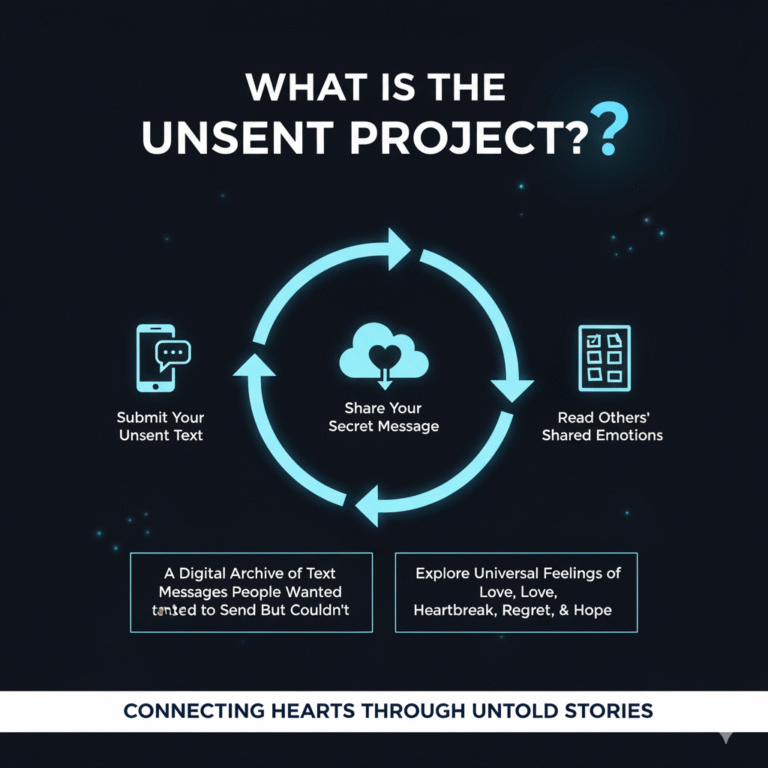
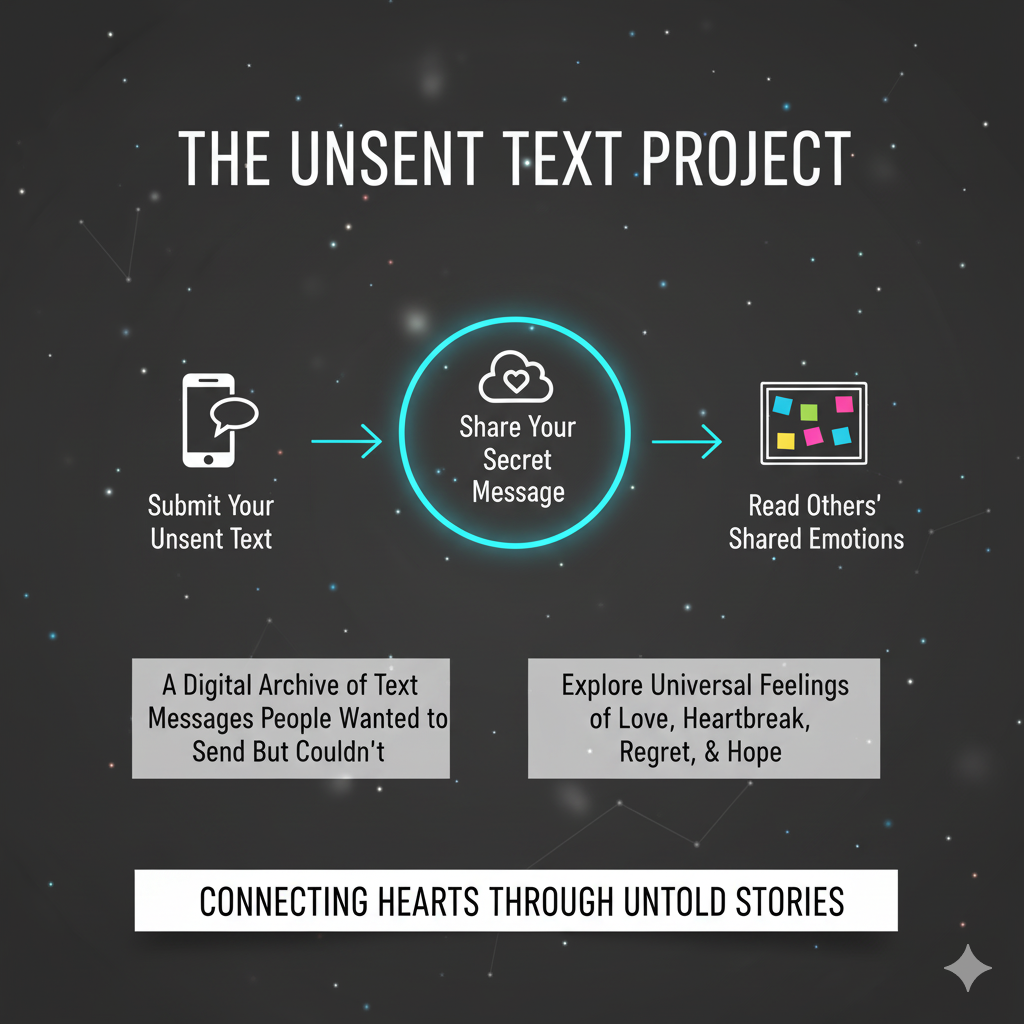
Wondering how the Unsent Text Project comes together? It’s disarmingly straightforward, and that’s the secret sauce.
You kick off by writing your unsent truth: imagine drafting a note to someone—“To Jamie… I still see you in every faded photo.” It’s the thing you thumbed out but tucked away.
Then you tag the vibe: some spots let you pin a color that fits the flavor—red for the slow burn of regret, blue for the blue-hour blues, green for a tentative “I’m healing.” That tag becomes the shorthand for the surf.
You drop it anonymously: no name, no trace—just your whisper winged into the wind. The platform’s upfront: “We’ll do our best to review each submission… due to the large quantity of submissions we receive, we cannot guarantee every submission will be posted.” That’s the realness right there—promise without pinky-swear.
Once it clears the queue, your text lands in the archive: a searchable, scrollable, color-coded surf where you and others can hunt names, moods, or moods, and feel the “oh, you too?” wash over you. The loop—write, tag, loose, lurk—makes the Unsent Text Project feel like a confessional with a view, easy to slip into but rich with the kind of resonance that sticks.
What Lives in the Archive: Themes, Feelings & Patterns
Peek into an Unsent Text Project archive and it’s like flipping through a thousand strangers’ nightstand drawers—a patchwork of aches, stitched from threads that tug universal.
There’s the first-love flicker: “To Jess… your laugh’s still the soundtrack I can’t skip,” that tender tangle of almost that never quite untied.
Breakups and the quiet that follows: “I waited for your text, but you left me on read forever,” the slow sting of what didn’t come.
Regret and the apologies that arrived too late: “I should’ve called when you were falling apart—sorry doesn’t fix it.” The weight of “if only,” unloaded here.
Gratitude that stayed a secret: “You pulled me through my worst and I never told you how much it meant.” Those unsent thanks hit like a warm hug from the shadows.
Goodbyes that never landed: “If I could I’d say goodbye with a smile, not silence.” They’re closure left in draft form.
What the Unsent Text Project does is shine a light on those draft-folder ghosts, turning them into a shared canvas of longing, loss, and love that never made it to the chat. And when you see the same lines repeat—the same color tags, the same name patterns—it tells you: you’re not the only one.
Why Posting to an Unsent Text Project Is Unexpectedly Healing
Why bother spilling something you’ll never send? That’s the hook of the Unsent Text Project—it’s not about delivery; it’s about dumping the load without the fallout. Here’s why people do it:
It unloads the heavy: Writing it out and letting it go into a non-judgmental space shakes off the weight you’ve been lugging.
It’s a safe stage: Anonymity means no read-receipt, no awkward reply—just you, closing a chapter without a fight.
It builds quiet company: Reading someone else’s “I never said I loved you” and nodding along? That’s the Unsent Text Project saying, “Been there.”
It becomes art: Those short, sharp texts? They’re micro-poems. The display? It’s a gallery of unsent hearts. That aesthetic meets catharsis angle is why this hook.
So if you’re wondering how to engage the Unsent Text Project, think less “send” and more “surrender.”
Colour Systems, Interface Flow & User Experience
Many versions of the Unsent Text Project (particularly the original) lean heavily on color and interface design to amplify the emotional curve. Here’s what that looks like, and why it matters.
You don’t just submit a message—you pick a color you associate with the feeling. That color becomes part of the story. For example, blue might stand for the ache of waiting, red for an intense regret, green for hope flickering in the dark.
Why’s it important? Because that color-tag works like a mood ring. Even if you don’t read the text, you feel the tone at a glance. On the archive side, that means you can filter by color and dive into the mood you’re living in right now. The interface: a simple form, color field, submit button; the archive: search bar, color filter, perhaps name search. It keeps things minimal so the emotion stays front-and-center.
For someone browsing the Unsent Text Project, that fluid experience—type, tag, submit or search—is what makes it both accessible and emotionally rich.
How to Contribute to an Unsent Text Project (and Get More from It)
Thinking of dipping your toe into your own unsent message? Here’s how to do it with a little more intention:
Pick your text: Write something you typed but never sent—short, raw, direct. “To Riley… I never told you good luck,” or “I should’ve hugged you that night.” Keep it real.
Tag your emotion: If the platform allows, pick the color/tag that fits you. Don’t overthink. If you’re stuck on two, pick the one that hits harder.
Stay anonymous: If you want the freedom of the archive, strip specifics that could identify you or someone else unnecessarily.
Submit and step away: Once it’s in, don’t keep refreshing waiting for a spike. The act of release matters more than hits.
Browse later: Use the archive to feel less alone. Search a name, filter by color, or just read. Let the human thread wrap around you.
Reflect: After browsing, journal about what you saw. Did you find echoes of yourself? Did you feel seen? That’s the value.
By doing the Unsent Text Project with purpose, you turn a whisper in your head into something that bends outward—not for applause, but for connection.
Ethical & Emotional Considerations of the Unsent Text Project
The Unsent Text Project holds power—but also responsibility. Before you dive deeply into it (or encourage someone else to), keep these in mind.
Privacy matters: Even anonymous submissions can feel vulnerable. Make sure you’re okay with the potential permanence of what you submit.
Emotional readiness: Browsing archives full of raw confessions is intense. If you’re already hurting, it might stir more than soothe.
Respect others: If you submit, avoid naming people in a harmful way. These are unsent thoughts, not public assault.
It’s not therapy: The Unsent Text Project can help you move feelings out of your system, but it’s not a substitute for real counselling.
Be mindful of search behavior: Searching your name hoping for a message addressed to you? That can become obsessive. Use it as reflection, not confirmation.
These guidelines help the Unsent Text Project remain a refuge, not a trigger.
Using the Unsent Text Project for Creative or Reflective Work
Beyond catharsis, the Unsent Text Project is fertile ground for creative work, personal growth, or group exercises.
Writers & poets: Grab a line like “I waited for you under falling stars” and spin it into a piece of micro-fiction or verse. The unsent message becomes your seed.
Therapy & journaling: Have clients write unsent texts as a warm-up. Then reflect on what held them back from sending it. Browse the archive and ask: Which color-tag am I picking, and why?
Classrooms & workshops: Students can write unsent texts about big transitions (moving, graduating, losing someone) and use them as springboards for discussion on silence and courage.
Visual art: Use the archive’s messages as prompts for collage, painting, or digital design—text meets texture.
When you treat the Unsent Text Project as more than submission, you unlock its multiplier value.
Addressing Common Questions & Criticisms of the Unsent Text Project
You’ll spot skeptics: “Is this even real?” “Do people submit or is it curated?” “Is my message ever going to be seen?” Let’s tackle those.
Is the Unsent Text Project real? Yes—platforms exist that collect these unsent messages, allow searching by name or color-tag, and host millions of entries. The value comes not just from existence, but from participation.
Will my message appear? Not always. Some archives queue submissions or have moderation. Delays happen. That doesn’t mean it’s broken—just that the flow isn’t instant.
Are the messages genuine? With anonymity, you can’t verify author identity—but the emotional consistency and volume suggest authenticity is high. Even if a few are performative, they don’t erase the collective truth.
Can I delete my message? In most platforms, once submitted and approved, it’s permanent. Think before you submit.
Does browsing trigger negative feelings? Possibly—it can stir regret, nostalgia, sadness. Use it actively—not passively. Set limits.
These reflections keep you grounded in reality when you engage the Unsent Text Project.
The Growing Relevance of the Unsent Text Project in a Digital Age
Why is this kind of platform gaining traction now? Because our digital environment is saturated with sent messages, replies, status updates—but far less with the ones we didn’t hit ‘send’ on.
We live in a culture where sharing and broadcasting are the norm; the unsent text is the silent counter-weight. The Unsent Text Project flips the script, giving those hidden drafts a public stage. It becomes both exhibition and exhale.
Also, as our mental-health sensitivity grows, recognizing that unsaid words carry weight matters. The Unsent Text Project becomes a tool—not for social media clout, but for emotional honesty.
As long as people type but hesitate, platforms like the Unsent Text Project will feel necessary, intimate, and current.
What the Unsent Text Project Archive Really Makes Visible
Scroll through the archive and you’ll spot patterns—a recurring language, repeated names, similar confessions. That’s not coincidence; it’s culture speaking. The archive shows what we silently hold onto: “What if I had said this?” “I still think of you.” “Thanks for staying.” “Sorry for leaving.” Each note is a micro-history, and together they map the emotional architecture of our generation.
It makes visible the unsent currents—the decisions not to speak, the consequences of silence, the weight of words unsent. When you plug “Unsent Text Project” into a search engine or into your heart, you’re tapping into that shared under-story.
How to Navigate and Search an Unsent Text Project Archive
Want to explore the archive wisely? Here are some user-tips:
Search by name or keyword: If you’re curious about a certain person, type the name and see what comes up. Keep expectations realistic—results may not match your story exactly.
Filter by tag or color: If you are in a certain emotional state, browse entries tagged with blue, green or whichever color resonates.
Limit your time: The emotional pull can go deep. Set 15-minute windows and walk away when done.
Reflect, don’t obsess: If you spot a message addressed to your name, great. But don’t get stuck chasing “is this about me?” part of the game is the not-knowing.
Use it creatively: Export a line and let it spark your own writing, or journal about your reaction to seeing others’ unsent words.
By navigating the archive intentionally, you get more from the Unsent Text Project experience than mere voyeurism.
Future Directions: Where Could the Unsent Text Project Go Next?
The concept of the Unsent Text Project is rich and evolving. Here are possible future paths:
Voice memos + unsent texts: Maybe it expands to audio confessions you never hit “send.”
Regional versions: Localized archives by language or culture, catching unsent messages from different corners of the world.
Interactive installations: Physical gallery shows where unsent texts are printed, hung, color-coded, and walked through.
Therapy integrations: Journaling apps that link to unsent-text sections as prompts for reflection.
AI-driven insights: Analyzing thousands of messages to map patterns—what colors dominate certain emotions, how unsent messages shift over time.
Whatever direction it takes, the Unsent Text Project remains anchored in one truth: unsent words are not irrelevant—they are powerful and persistent.
FAQs About the Unsent Text Project
Final Reflections: Why the Unsent Text Project Matters
So, what is the value of the Unsent Text Project? In simplest terms: it gives your silence a stage. In a world of constant pings and instant replies, it’s a quiet rebellion—saying the messages we didn’t send still carry weight, still shape our stories.
When you type that draft and then delete it, you often feel the same as if you’d hit send—but you don’t trigger the conversation, you hang in the limbo. The Unsent Text Project says: that limbo matters too. You wrote it, you felt it, now you can let it go. Even if only to a faceless archive.